


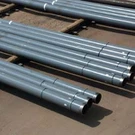


Hey there! As a steel tube supplier, I've been dealing with all sorts of steel tubes on a daily basis. One question that often pops up from our customers is about the differences between API and ASTM steel tubes. So, let's dive right in and break it down.
Standards and Specifications
First off, API and ASTM are two different sets of standards. API stands for the American Petroleum Institute. Their standards are mainly focused on the oil and gas industry. These standards ensure that the steel tubes used in oil and gas exploration, production, and transportation can withstand the harsh conditions they'll be exposed to. For example, API steel tubes need to have high resistance to corrosion and pressure since they're often used in deep - sea drilling or long - distance pipelines.
On the other hand, ASTM is the American Society for Testing and Materials. ASTM has a much broader scope. It covers a wide range of industries, not just oil and gas. ASTM standards are more about general material properties, such as mechanical properties, chemical composition, and manufacturing processes. So, ASTM steel tubes can be used in various applications, like construction, automotive, and machinery.
Chemical Composition
The chemical composition of API and ASTM steel tubes also shows some differences. API steel tubes usually have a more specific chemical makeup to meet the requirements of the oil and gas industry. They often contain elements that enhance corrosion resistance, like chromium, nickel, and molybdenum. For instance, in some API tubes used in sour gas environments, they need to have a certain amount of these alloying elements to prevent hydrogen sulfide corrosion.
ASTM steel tubes, however, have a more diverse chemical composition depending on their intended use. For example, JIS G3456 Carbon Steel Pipes For High Temperature Service follow ASTM - related standards and are designed for high - temperature applications. They typically have a higher carbon content to improve their strength at high temperatures, but the specific chemical composition can vary widely based on the exact ASTM specification they adhere to.
Mechanical Properties
When it comes to mechanical properties, API and ASTM steel tubes have different focuses. API steel tubes need to have excellent toughness and strength to handle high - pressure situations. In oil and gas wells, the pressure can be extremely high, and the tubes need to be able to withstand that pressure without cracking or deforming. They also need to have good ductility to be able to bend and twist during installation without breaking.


ASTM steel tubes' mechanical properties are more application - specific. For example, 20# Seamless Steel Pipe For Liquid Service are used for transporting liquids. They need to have sufficient strength to hold the liquid pressure, but the requirements might not be as extreme as those for API tubes in oil and gas applications. Other ASTM tubes used in construction might need to have good weldability and formability to be easily fabricated into different structures.
Manufacturing Processes
The manufacturing processes for API and ASTM steel tubes can also vary. API steel tubes often go through more rigorous quality control during manufacturing. Since they're used in critical oil and gas operations, any defect in the tube can lead to serious consequences, such as oil spills or well failures. So, API tubes are usually made with advanced manufacturing techniques, like seamless manufacturing, which ensures a more uniform structure and fewer defects.
ASTM steel tubes, depending on their application, can be manufactured using a variety of methods. Some ASTM tubes can be made through seamless processes, while others can be welded. For example, ASTM A335 P11 Seamless Alloy Steel Pipe is a seamless tube made for high - temperature and high - pressure applications in industries like power generation. But there are also ASTM - compliant welded tubes for less demanding applications, which are more cost - effective.
Testing and Certification
API steel tubes have to pass a series of strict tests to get API certification. These tests include non - destructive testing, like ultrasonic testing and magnetic particle testing, to detect any internal or surface defects. They also go through destructive testing, such as tensile testing and impact testing, to ensure their mechanical properties meet the API standards.
ASTM steel tubes also need to be tested according to their specific ASTM specifications. The testing methods can be similar to those for API tubes, but the acceptance criteria might be different. For example, the tensile strength requirements for an ASTM tube used in a low - stress application might be lower than those for an API tube used in a high - pressure oil well.
Cost
In general, API steel tubes tend to be more expensive than ASTM steel tubes. This is mainly because of the more strict manufacturing processes, higher - quality materials, and more rigorous testing requirements. The cost of API tubes also includes the cost of API certification, which adds to the overall price.
ASTM steel tubes, with their wider range of applications and more diverse manufacturing methods, can have a broader cost range. Some ASTM tubes made with simple manufacturing processes and common materials can be quite affordable, while those made for high - end applications with advanced materials and processes can be relatively expensive.
Applications
As we've mentioned before, API steel tubes are primarily used in the oil and gas industry. They're used in oil wells for drilling, production, and transportation of oil and gas. API tubes can also be used in refineries and petrochemical plants.
ASTM steel tubes, on the other hand, have a much wider range of applications. They can be used in construction for building structures, in automotive for making parts like exhaust pipes, and in machinery for various mechanical components.
Conclusion
So, in a nutshell, the differences between API and ASTM steel tubes lie in their standards, chemical composition, mechanical properties, manufacturing processes, testing, cost, and applications. As a steel tube supplier, I can offer both API and ASTM steel tubes to meet the different needs of our customers.
If you're in the market for steel tubes and are not sure whether API or ASTM tubes are right for your project, don't hesitate to reach out. We have a team of experts who can help you choose the most suitable steel tubes based on your specific requirements. Whether you need tubes for oil and gas operations or for other industrial uses, we've got you covered. Contact us today to start the procurement discussion and find the best steel tube solution for your business.
References
- American Petroleum Institute (API) standards documentation
- American Society for Testing and Materials (ASTM) standards documentation