


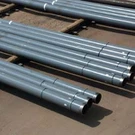


Hey there! As a metal pipe supplier, I've been dealing with all sorts of metal pipes for years. One question that often pops up is about the acoustic properties of metal pipes. So, let's dive right into it!


Basics of Acoustic Properties
First off, what are acoustic properties anyway? In simple terms, they're the characteristics of a material that affect how sound behaves when it interacts with that material. For metal pipes, these properties play a huge role in various applications, from musical instruments to industrial piping systems.
One of the key acoustic properties is sound transmission. Metal pipes are generally good conductors of sound. This means that sound can travel through them relatively easily. The reason behind this is the dense atomic structure of metals. The atoms in metals are closely packed, allowing sound waves to propagate efficiently through the material.
Another important property is sound reflection. When a sound wave hits the surface of a metal pipe, a portion of it gets reflected back. The amount of reflection depends on several factors, such as the smoothness of the pipe's surface and the angle at which the sound wave hits it. A smooth - surfaced metal pipe will reflect more sound compared to a rough - surfaced one.
Factors Affecting Acoustic Properties of Metal Pipes
Material Composition
Different metals have different acoustic properties. For example, steel pipes are widely used in many industries because they offer a good balance between strength and acoustic performance. Steel has a high density, which allows for efficient sound transmission. On the other hand, aluminum pipes are lighter and have a different acoustic profile. They tend to absorb more sound than steel pipes, which can be an advantage in some applications where noise reduction is crucial.
Pipe Dimensions
The diameter and thickness of the pipe also play a significant role. A larger - diameter pipe will generally have a lower resonant frequency compared to a smaller - diameter one. Resonant frequency is the frequency at which the pipe vibrates most easily. When a sound wave matches the resonant frequency of the pipe, it can cause the pipe to vibrate strongly, which can lead to increased sound transmission. Thicker pipes, on the other hand, tend to dampen vibrations more effectively, reducing the amount of sound that is transmitted through them.
Surface Finish
As mentioned earlier, the surface finish of the pipe affects sound reflection. A polished metal pipe will have a more specular (mirror - like) reflection of sound, while a rough - finished pipe will scatter the sound in different directions. This scatter can be useful in some applications, such as in architectural acoustics, where a more diffuse sound field is desired.
Applications Based on Acoustic Properties
Musical Instruments
Metal pipes are widely used in the manufacturing of musical instruments, such as trumpets, trombones, and flutes. The acoustic properties of the metal determine the tone, pitch, and timbre of the instrument. For example, the choice of metal and the thickness of the pipe in a trumpet can greatly affect its sound quality. A well - crafted trumpet made from high - quality brass (a type of metal alloy) will produce a rich, warm sound.
Industrial Piping Systems
In industrial settings, the acoustic properties of metal pipes are important for noise control. For instance, in a chemical plant, where there are many pipes carrying fluids under pressure, the sound generated by the flow of the fluid can be a significant source of noise. By choosing the right type of metal pipe and adjusting its dimensions, engineers can reduce the amount of noise that is transmitted through the pipes.
Our Metal Pipe Offerings
Now, let me tell you about some of the metal pipes we offer. We have a wide range of products that are suitable for different applications based on their acoustic properties.
We have the DIN1629 EN10216 Seamless Steel Tubes For Pressure Purposes. These tubes are made from high - quality steel and are designed for pressure applications. Their seamless construction ensures efficient sound transmission, making them suitable for applications where sound needs to be carried over long distances, such as in some industrial piping systems.
Another great product is the JIS G3454 Carbon Steel Pipes. These pipes are known for their good strength and acoustic performance. They are often used in general - purpose piping applications, where a balance between cost and performance is required.
We also offer the PSL2 L245N Seamless Steel Pipe. This pipe is suitable for high - pressure applications and has excellent acoustic properties. Its seamless design reduces the chances of sound leakage, making it ideal for applications where noise control is important.
Conclusion
In conclusion, the acoustic properties of metal pipes are complex and depend on several factors such as material composition, pipe dimensions, and surface finish. Understanding these properties is crucial for choosing the right metal pipe for different applications, whether it's for musical instruments or industrial piping systems.
If you're in the market for metal pipes and want to learn more about how our products can meet your acoustic requirements, don't hesitate to reach out. We're here to help you make the best choice for your project.
References
- Kinsler, L. E., Frey, A. R., Coppens, A. B., & Sanders, J. V. (2000). Fundamentals of Acoustics. John Wiley & Sons.
- Beranek, L. L. (1992). Acoustics. American Institute of Physics Press.