


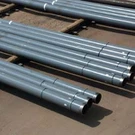


As a supplier of Fusion-Bonded Epoxy (FBE) coating, I've been deeply involved in understanding the performance characteristics of this remarkable material. One of the most crucial questions that often arises in the industry is: How well does FBE Coating bend without cracking? In this blog, I'll delve into the science behind FBE coating's bending capabilities, explore the factors that influence its performance, and share some real-world insights based on our experiences.


Understanding FBE Coating
FBE coating is a thermosetting polymer that is applied to steel pipes and other metal substrates to provide corrosion protection. It is applied in a powder form and then heated to a high temperature, where it melts and fuses to the substrate, forming a continuous, protective layer. FBE coating is known for its excellent adhesion, chemical resistance, and mechanical properties, making it a popular choice for a wide range of applications, including oil and gas pipelines, water treatment facilities, and industrial structures.
The Importance of Bending Performance
In many applications, steel pipes are subjected to bending during installation or operation. For example, pipes may need to be bent to fit around obstacles or to follow the contour of the terrain. If the FBE coating on the pipe cracks during bending, it can compromise the integrity of the coating and expose the underlying steel to corrosion. This can lead to costly repairs, downtime, and even safety hazards. Therefore, it is essential to ensure that the FBE coating can withstand bending without cracking.
Factors Affecting FBE Coating's Bending Performance
Several factors can influence the bending performance of FBE coating. These include:
- Coating Thickness: Thicker coatings generally have better bending performance than thinner coatings. This is because thicker coatings can better absorb the stresses generated during bending without cracking.
- Substrate Surface Preparation: Proper surface preparation of the substrate is crucial for ensuring good adhesion between the FBE coating and the steel. If the surface is not clean or properly roughened, the coating may not adhere well and may crack during bending.
- Bending Radius: The bending radius of the pipe is another important factor. Smaller bending radii generate higher stresses in the coating, increasing the likelihood of cracking. Therefore, it is important to ensure that the bending radius is within the recommended limits for the FBE coating.
- Temperature: The temperature at which the bending is performed can also affect the coating's performance. Bending at low temperatures can make the coating more brittle and prone to cracking, while bending at high temperatures can cause the coating to soften and flow, reducing its adhesion.
- Coating Formulation: The formulation of the FBE coating can also play a role in its bending performance. Some coatings are specifically designed to have better flexibility and bending resistance than others.
Testing FBE Coating's Bending Performance
To ensure that the FBE coating meets the required bending performance standards, it is important to conduct testing. There are several methods available for testing the bending performance of FBE coating, including:
- Mandrel Bend Test: In this test, a coated pipe is bent around a mandrel of a specified diameter. The coating is then inspected for cracks using a magnifying glass or other appropriate method.
- Three-Point Bend Test: In this test, a coated pipe is supported at two points and loaded at a third point in the middle. The coating is then inspected for cracks using a magnifying glass or other appropriate method.
- Ring Bend Test: In this test, a coated pipe is cut into rings and then bent using a special fixture. The coating is then inspected for cracks using a magnifying glass or other appropriate method.
Real-World Examples
At our company, we have extensive experience in supplying FBE coating for a wide range of applications. We have conducted numerous tests on our coatings to ensure that they meet the required bending performance standards. Here are some real-world examples of how our FBE coating has performed in bending applications:
- Oil and Gas Pipelines: We have supplied FBE coating for several oil and gas pipelines around the world. In one project, the pipes were bent to a radius of 5D (five times the pipe diameter) without any cracking of the coating. This demonstrates the excellent bending performance of our FBE coating.
- Water Treatment Facilities: We have also supplied FBE coating for water treatment facilities. In one project, the pipes were bent to a radius of 3D (three times the pipe diameter) without any cracking of the coating. This shows that our FBE coating can withstand relatively small bending radii without cracking.
Conclusion
In conclusion, FBE coating is a highly effective corrosion protection solution for steel pipes and other metal substrates. Its bending performance is influenced by several factors, including coating thickness, substrate surface preparation, bending radius, temperature, and coating formulation. By ensuring that these factors are carefully controlled, it is possible to achieve excellent bending performance without cracking. At our company, we are committed to providing high-quality FBE coating that meets the most demanding requirements of our customers. If you are interested in learning more about our FBE coating or would like to discuss your specific application, please [Contact Us] to start a procurement negotiation. We look forward to working with you to find the best corrosion protection solution for your project.
References
- ASTM D3033 - Standard Test Method for Impact Resistance of Pipeline Coatings (Falling Weight Test)
- ISO 21809 - Petroleum and natural gas industries - External coatings for buried or submerged pipelines used in pipeline transportation systems
- NACE RP0394 - Pipeline External Fusion-Bonded Epoxy Coating Systems for Corrosion Control