


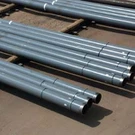


As a reputable metal pipe supplier, I understand the importance of assessing the ductility of metal pipes. Ductility is a crucial mechanical property that indicates a material's ability to deform under tensile stress without fracturing. It is a key factor in numerous applications, from structural construction to industrial machinery, where pipes must withstand various forms of stress and deformation. In this blog post, I will delve into the methods for measuring the ductility of a metal pipe, providing insights that can guide both industry professionals and customers in making informed decisions.
Understanding Ductility
Before discussing the measurement methods, it is essential to understand what ductility means. Ductility is a measure of how much a material can be stretched or pulled before it breaks. A highly ductile material can be drawn into a thin wire or formed into complex shapes without cracking or shattering. In the context of metal pipes, ductility is vital as it allows the pipes to withstand bending, expansion, and contraction without failure.
The ductility of a metal is influenced by several factors, including its chemical composition, grain structure, and the presence of impurities. For example, metals with a face-centered cubic (FCC) crystal structure, such as copper and aluminum, tend to be more ductile than those with a body-centered cubic (BCC) or hexagonal close-packed (HCP) structure. Additionally, heat treatment and mechanical processing can significantly affect a metal's ductility.
Why Measuring Ductility Matters
Measuring the ductility of metal pipes is crucial for several reasons. Firstly, it ensures the safety and reliability of the pipes in various applications. Pipes with low ductility may be prone to cracking or brittle failure under stress, which can lead to leaks, structural failures, and potentially dangerous situations. By accurately measuring ductility, we can identify pipes that meet the required standards and specifications, minimizing the risk of accidents and ensuring the long-term performance of the pipes.
Secondly, ductility is an important factor in determining the formability of metal pipes. In manufacturing processes such as bending, expanding, and threading, pipes need to have sufficient ductility to be shaped without cracking. Measuring ductility allows us to select the appropriate pipes for specific manufacturing operations, improving the efficiency and quality of the production process.
Finally, measuring ductility can help in quality control and material selection. By comparing the ductility of different batches of metal pipes or different types of materials, we can ensure consistency in product quality and make informed decisions about which materials are best suited for a particular application.
Measuring Ductility: Common Methods
There are several methods for measuring the ductility of metal pipes, each with its own advantages and limitations. Here are some of the most commonly used methods:
Tensile Testing
Tensile testing is the most widely used method for measuring the ductility of metals. In a tensile test, a specimen of the metal pipe is subjected to a gradually increasing tensile force until it breaks. During the test, the elongation of the specimen is measured, and the percentage of elongation and reduction in cross-sectional area are calculated.
The percentage of elongation is determined by comparing the original gauge length of the specimen to its final length after fracture. It is calculated using the following formula:
[
\text{Elongation} (%) = \frac{\text{Final length} - \text{Original length}}{\text{Original length}} \times 100
]
The reduction in cross-sectional area is calculated by comparing the original cross-sectional area of the specimen to its minimum cross-sectional area at the fracture point. It is expressed as a percentage using the following formula:
[
\text{Reduction in area} (%) = \frac{\text{Original area} - \text{Minimum area}}{\text{Original area}} \times 100
]
Higher values of elongation and reduction in area indicate greater ductility. Tensile testing provides valuable information about the mechanical properties of the metal, including its yield strength, ultimate tensile strength, and modulus of elasticity.
Bend Testing
Bend testing is another common method for assessing the ductility of metal pipes. In a bend test, a pipe specimen is bent around a mandrel or a former to a specified angle. The test is used to determine whether the pipe can withstand bending without cracking or fracturing.
There are several types of bend tests, including the simple bend test, the guided bend test, and the reverse bend test. In the simple bend test, the pipe is bent to a specified angle without any additional support. In the guided bend test, the pipe is bent using a guide to control the bending radius and ensure uniform deformation. The reverse bend test involves bending the pipe in the opposite direction after the initial bend to check for any signs of cracking or damage.
The results of a bend test are typically evaluated based on the appearance of the bent pipe. If there are no cracks or fractures on the outer surface of the pipe after bending, the pipe is considered to have passed the test and is deemed to have sufficient ductility for the intended application.
Impact Testing
Impact testing is used to evaluate the toughness and ductility of metal pipes under dynamic loading conditions. In an impact test, a notched specimen of the metal pipe is struck by a pendulum hammer. The energy absorbed by the specimen during the impact is measured, and the results are used to assess the material's resistance to fracture.
There are two main types of impact tests: the Charpy impact test and the Izod impact test. In the Charpy impact test, the specimen is supported at both ends and struck in the center by the pendulum hammer. In the Izod impact test, the specimen is clamped at one end and struck on the opposite end by the hammer.
The results of an impact test are reported as the amount of energy absorbed by the specimen in joules. Higher energy absorption values indicate greater toughness and ductility. Impact testing is particularly important for applications where the pipes are subjected to sudden or dynamic loading, such as in transportation and construction.
Challenges in Measuring Ductility
While there are established methods for measuring the ductility of metal pipes, there are also several challenges that need to be addressed. One of the main challenges is ensuring the accuracy and consistency of the test results. The ductility of a metal can be affected by various factors, such as the specimen preparation, the testing equipment, and the testing conditions. Therefore, it is important to follow standardized testing procedures and use calibrated equipment to obtain reliable results.
Another challenge is dealing with the anisotropy of metal pipes. Anisotropy refers to the variation in the mechanical properties of a material depending on the direction of measurement. Metal pipes are often manufactured using processes such as rolling and extrusion, which can introduce anisotropy in the material. As a result, the ductility of a pipe may be different in different directions. To accurately measure the ductility of a pipe, it is necessary to consider the anisotropy and test the pipe in multiple directions.
Finally, measuring the ductility of small-diameter or thin-walled pipes can be challenging. The small size and thin walls of these pipes can make it difficult to prepare specimens for testing and can also affect the accuracy of the test results. Specialized testing techniques and equipment may be required to measure the ductility of these types of pipes.


Conclusion
Measuring the ductility of metal pipes is a critical step in ensuring their quality, safety, and performance. By understanding the various methods for measuring ductility and the challenges associated with them, we can make informed decisions about the selection and use of metal pipes in different applications.
As a metal pipe supplier, I am committed to providing high-quality pipes that meet the required standards and specifications. We use advanced testing equipment and follow strict quality control procedures to ensure the ductility and other mechanical properties of our pipes. Whether you need 34CrMo4 Seamless Steel Pipe, BS 3059 Steel Boiler And Superheater Tubes, or ASTM A333 Grade 6 Seamless Steel Pipe, we have the expertise and resources to meet your needs.
If you have any questions about the ductility of metal pipes or would like to discuss your specific requirements, please feel free to contact us. We look forward to the opportunity to work with you and provide you with the best solutions for your metal pipe needs.
References
- Callister, W. D., & Rethwisch, D. G. (2017). Materials Science and Engineering: An Introduction. Wiley.
- ASM Handbook Committee. (1990). ASM Handbook Volume 8: Mechanical Testing and Evaluation. ASM International.
- ASTM International. (2018). ASTM Standards on Metallic Materials Testing. ASTM International.