


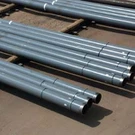


Hey there! As an ERW pipe supplier, one question I get asked a lot is, "Can ERW pipes be bent?" Well, let's dig into this topic and find out.
First off, let's understand what ERW pipes are. Electric Resistance Welded (ERW) pipes are made by rolling sheet steel into a round shape and then welding the seam using electrical resistance. They're widely used in various industries because they're cost - effective, have good mechanical properties, and are available in different sizes and wall thicknesses.
Now, back to the main question: Can they be bent? The short answer is yes, ERW pipes can be bent. But, there are several factors that we need to take into account when it comes to bending them.
Material properties
The material of the ERW pipe has a huge impact on its bendability. Most ERW pipes are made of carbon steel, and the grade of the steel matters a great deal. Higher strength steels can be more challenging to bend compared to lower strength ones.
For example, if we're dealing with a pipe made of a high - strength alloy steel, we'll need more force to bend it without causing damage. On the other hand, pipes made of mild steel are generally more forgiving and easier to bend.


Pipe dimensions
The diameter and wall thickness of the ERW pipe also play a crucial role in the bending process. Smaller diameter pipes are usually easier to bend than larger ones. Small Diameter ERW Steel Pipe can often be bent using simple bending tools.
When it comes to wall thickness, thinner - walled pipes are more flexible and can be bent with less force. However, we have to be careful not to over - bend them as it can cause the wall to collapse or wrinkle. Thicker - walled pipes require more powerful bending equipment but are less likely to deform in an unwanted way during the bending process.
Bending methods
There are a few different methods for bending ERW pipes:
Cold bending
Cold bending is a popular method because it doesn't require heating the pipe, which means there's no change in the material properties due to heat. This method uses mechanical force to bend the pipe. It can be done using various tools like pipe benders. Cold bending is suitable for small to medium - sized pipes and mild steel pipes.
However, it has its limitations. As we mentioned earlier, high - strength steels or large - diameter pipes might not be able to be cold - bent easily. Excessive force during cold bending can result in cracks, especially near the weld seam, which is a critical point in ERW pipes.
Hot bending
Hot bending involves heating the pipe to a specific temperature before bending it. This makes the pipe more malleable, allowing for complex bends and reducing the risk of cracking. The heating process softens the steel, making it easier to shape.
But hot bending isn't without its drawbacks. It requires specialized equipment to heat the pipe uniformly, and it can change the mechanical properties of the steel in the heated area. We also have to take extra safety precautions during the heating process.
Quality control during bending
No matter which bending method we use, quality control is essential. We need to ensure that the bend meets the required specifications, such as the bend radius and angle.
Inspecting the weld seam after bending is crucial. Any signs of cracking or separation at the weld can compromise the integrity of the pipe. Non - destructive testing methods like ultrasonic testing or magnetic particle testing can be used to check for any hidden defects in the pipe, especially after the bending process.
Standards and specifications
When it comes to ERW pipes, there are industry standards that we need to follow. For example, ASTM A691 Electric Fusion Welded Carbon And Alloy Steel Pipe outlines the requirements for electric fusion - welded carbon and alloy steel pipes. These standards also have some guidelines regarding the bending and forming of the pipes.
Compliance with standards like ASTM A691 ensures that the bent pipes are safe to use in various applications, whether it's in the oil and gas industry, construction, or plumbing.
Applications of bent ERW pipes
Bent ERW pipes have a wide range of applications. In the construction industry, they're used for making structures like handrails, frames, and support systems. The ability to bend the pipes allows for more complex and customized designs.
In the oil and gas sector, API 5L B LSAW Steel Pipes and other ERW pipes are often bent to fit the layout of pipelines. Bends are necessary to navigate around obstacles and to change the direction of the pipeline flow.
In plumbing, bent ERW pipes are used to create the right angles and curves in water supply and drainage systems.
So, should you choose bent ERW pipes?
If you're in the market for pipes that can be bent to your specific needs, ERW pipes are a great option. They offer a good balance between cost, availability, and bendability.
However, it's important to work with a reliable supplier who understands the requirements of bending and can provide you with high - quality pipes. As a supplier, we have the expertise to guide you through the process, from selecting the right pipe material and dimensions to choosing the best bending method for your project.
If you're interested in purchasing ERW pipes for your bending needs, we're here to help. Whether you're working on a small - scale DIY project or a large industrial construction, we can provide you with the right pipes at competitive prices.
Get in touch with us to discuss your requirements and start the procurement process. We're eager to work with you and make sure your project gets the best possible pipes.
References
- American Society for Testing and Materials (ASTM) standards related to ERW pipes
- Industry handbooks on pipe manufacturing and bending processes.