


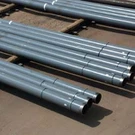


Can ERW pipes be used in marine applications? This is a question that often arises in the maritime industry, and as an ERW pipe supplier, I am well - placed to provide a comprehensive answer.
Understanding ERW Pipes
Electric Resistance Welded (ERW) pipes are manufactured by rolling steel strips and then welding the edges together using electrical resistance. This process creates a continuous weld along the length of the pipe. ERW pipes are known for their cost - effectiveness, high production efficiency, and consistent quality. They come in a wide range of sizes and wall thicknesses, making them suitable for various applications.
Requirements for Marine Applications
Marine applications have unique and stringent requirements. The pipes used in these settings must withstand harsh environmental conditions, including saltwater corrosion, high pressure, and extreme temperatures. They also need to have excellent mechanical properties to resist impacts and vibrations that are common in marine environments. For example, in offshore oil and gas platforms, pipes are used to transport oil, gas, and other fluids under high - pressure conditions. In shipbuilding, pipes are used for various systems such as cooling, firefighting, and ballast.
Advantages of ERW Pipes in Marine Applications
Cost - effectiveness
One of the most significant advantages of ERW pipes is their cost - effectiveness. Compared to seamless pipes, ERW pipes are generally less expensive to produce. This cost advantage can be a major factor in large - scale marine projects where budget constraints are a concern. For shipbuilders and offshore platform operators, using ERW pipes can result in significant cost savings without sacrificing too much in terms of performance.
Availability and Sizing
ERW pipes are readily available in a wide range of sizes and lengths. This makes it easier for marine engineers and project managers to source the right pipes for their specific requirements. Whether it's a small - diameter pipe for a ship's cooling system or a large - diameter pipe for an offshore pipeline, ERW pipes can usually be found to meet the needs. Additionally, the ability to customize the length of ERW pipes allows for more efficient installation and reduces waste.
Weld Quality
Modern ERW pipe manufacturing processes have advanced to produce high - quality welds. With proper quality control measures in place, the welds in ERW pipes can have excellent strength and integrity. This is crucial in marine applications where the pipes need to maintain their structural integrity under high - stress conditions. For example, in a marine pipeline, a weak weld could lead to leaks or even pipe failure, which can have serious environmental and economic consequences.
Challenges and Considerations
Corrosion Resistance
One of the main challenges of using ERW pipes in marine applications is their corrosion resistance. Saltwater is highly corrosive, and if the pipes are not properly protected, they can corrode quickly. To address this issue, ERW pipes can be coated with anti - corrosion materials such as epoxy, polyethylene, or zinc. These coatings act as a barrier between the pipe and the saltwater, preventing corrosion. Additionally, cathodic protection systems can be installed to further protect the pipes from corrosion.
Weld Defects
Although modern manufacturing processes have improved weld quality, there is still a risk of weld defects in ERW pipes. Defects such as lack of fusion, porosity, or inclusions can weaken the weld and reduce the pipe's overall strength. To mitigate this risk, strict quality control measures should be implemented during the manufacturing process. Non - destructive testing methods such as ultrasonic testing, magnetic particle testing, and radiographic testing can be used to detect and eliminate any potential weld defects.
Industry Standards and Regulations
When using ERW pipes in marine applications, it is essential to comply with relevant industry standards and regulations. For example, API 5L Welded Steel Pipes provide specifications for the manufacture of welded steel pipes for use in the petroleum and natural gas industries. These standards ensure that the pipes meet the required mechanical properties, chemical composition, and weld quality.
Another important standard is ASTM A333 Welded Steel Pipe For Low - Temperature Service. In marine applications, especially in cold regions, pipes need to be able to withstand low temperatures without losing their ductility and toughness. ASTM A333 pipes are designed to meet these requirements.
EN10217 Non Alloy SAWH Or SSAW Steel Tubes At Specified Room Temperature is also relevant for some marine applications. This standard specifies the technical delivery conditions for non - alloy steel tubes for pressure purposes at specified room temperature.
Case Studies
There are numerous successful case studies of using ERW pipes in marine applications. In some shipbuilding projects, ERW pipes have been used for the ship's freshwater and seawater piping systems. With proper anti - corrosion coatings and quality control, these pipes have performed well over long periods of time.
In offshore oil and gas platforms, ERW pipes have been used for non - critical pipelines. For example, in some secondary fluid transfer systems, where the pressure and fluid characteristics are not as demanding, ERW pipes have proven to be a reliable and cost - effective solution.


Conclusion
In conclusion, ERW pipes can indeed be used in marine applications. They offer several advantages such as cost - effectiveness, availability, and good weld quality. However, there are also challenges such as corrosion resistance and weld defects that need to be addressed. By implementing proper anti - corrosion measures, strict quality control, and complying with relevant industry standards, ERW pipes can be a viable option for many marine projects.
If you are involved in a marine project and are considering using ERW pipes, I encourage you to contact us for more information. Our team of experts can provide you with detailed technical specifications, cost estimates, and guidance on how to ensure the successful use of ERW pipes in your specific application. We are committed to providing high - quality ERW pipes that meet the most demanding marine requirements.
References
- API Standard 5L - Specification for Line Pipe
- ASTM A333/A333M - Standard Specification for Seamless and Welded Steel Pipe for Low - Temperature Service
- EN 10217 - Specification for non - alloy and alloy steel tubes for pressure purposes