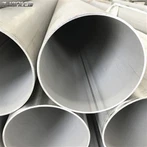
Introduction to Special Tubes "API Tubes"
"Special pipes" generally refer to steel pipes that are different from ordinary fluid conveyance pipes and are used in extreme or specific working conditions, while "API pipes" specifically refer to pipes used in the oil and gas industry that comply with American Petroleum Institute standards.
What is API pipe?
API stands for American Petroleum Institute, which has established a series of standards widely recognized by the global oil and gas industry. API pipe refers specifically to steel pipes that meet these standards and are mainly used in oil and gas exploration, extraction, and transportation.
| Core Standards | |
| API 5CT | Casing and Tubing Specification - Used for oil well casing structures (casing) and oil production (tubing). |
| API 5L | Line Pipe Specification - Used for onshore and offshore oil and natural gas transmission pipelines. |
What is a "special pipe"?
A "special pipe" is a relative concept, as opposed to ordinary conveying pipes or structural pipes. In the API context, "special" primarily refers to the following aspects:
| Special materials | High-strength, high-toughness, corrosion-resistant alloy steel is used. |
| Special processes | Employing stricter heat treatment processes, more advanced forming and welding technologies. |
| Special performance requirements | Meeting extreme environmental conditions such as low-temperature resistance, high-temperature resistance, corrosion resistance, crush resistance, and resistance to hydrogen sulfide stress corrosion cracking. |
| Special applications | Used in deep wells, ultra-deep wells, high-pressure gas wells, sulfur-containing oil and gas wells, and Arctic marine environments. |
Main types and characteristics
The following are some typical types of "special tube API tubes":
|
Type |
Corresponding API standards |
Main features and uses |
|
High-grade steel pipeline pipes |
API 5L |
Used for high-pressure, high-volume pipelines. Requires extremely high strength, toughness, and weldability. |
|
Highly resistant casing |
API 5CT |
Used in ultra-deep wells and large-displacement wells, it withstands extremely high external pressure and prevents the wellbore from being crushed by the formation. |
|
Special threaded joint oil casing |
API 5CT (with accompanying special thread standards) |
Standard API threads have limited sealing and connection strength. Special threads are used for harsh conditions such as high-pressure gas wells and thermal recovery wells. |
The uniqueness of the manufacturing process
The manufacturing of special API pipes is far more complex than that of ordinary steel pipes. Key steps include:
| Smelting | |
| Rolling/forming | Seamless pipes |
| Welded pipes | |
| Heat treatment | |
| Non-de | |
| structive testing | |
| Thread processing and inspection | |
Quality Control and Certification
| PSL | The API standard includes the concept of product specification level (PSL). PSL2/PSL3 requirements are much higher than PSL1, with stricter specifications for chemical composition, mechanical properties, non-destructive testing, dimensional tolerances, etc. Special tubes are usually required to meet PSL2 or higher. |
| Third-party certification | Manufacturers must be API certified, and products usually need to undergo full-process supervision and acceptance by a third-party inspection agency. |
Summary
Special API pipes represent the highest level of technology in steel pipes used in the oil and gas industry. They are no longer simple "steel materials," but rather carefully designed, strictly controlled high-performance engineering materials that are key to the development of conventional oil and gas resources that are difficult to extract (such as deep sea, shale gas, and high-sulfur gas fields). Their value lies in their reliability, safety, and long service life, which far exceed the cost of their rawmaterials.
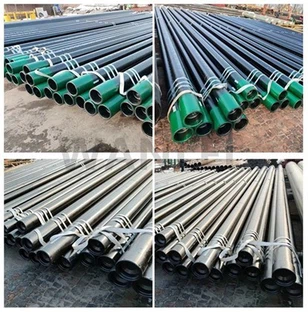
We are able to provide high quality special API pipes according to customers' needs and look forward to your purchase.