


Piping materials used in water treatment and seawater desalination projects often face demanding service conditions. Chloride ions, water temperature, residual chlorine, operating pressure and stagnant water zones can all contribute to pitting and crevice corrosion in stainless steel. Choosing the right alloy grade helps extend service life, improve operational stability and keep project costs under control.
304L is suitable for clean freshwater and drinking water pipelines with low chloride content. It performs reliably at ambient temperature when residual chlorine levels are low, which is why it is commonly used in municipal water networks, purified water circulation systems and product water lines in desalination plants. However, 304L should not be used in coastal areas, brackish water systems or any location exposed to seawater, as its resistance to chloride-induced corrosion is insufficient for these environments.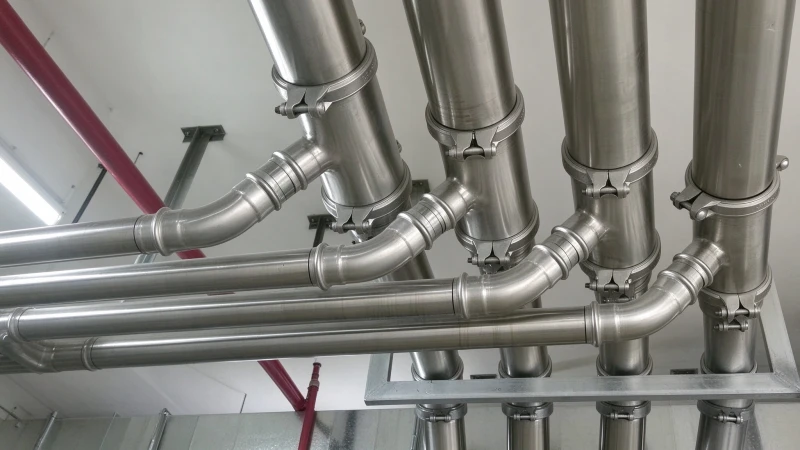
316L, with molybdenum added to improve chloride resistance, is widely used in general marine applications. It is suitable for pre-treatment piping, intake screens and low-pressure sections of desalination facilities where chloride exposure is moderate. Even so, 316L is not recommended for long-term continuous immersion in warm seawater or high-concentration brine, as slow pitting damage may develop after several years of service.

Duplex 2205 is commonly specified for seawater reverse osmosis plants. Its dual austenite–ferrite microstructure provides yield strength roughly twice that of 316L, along with good resistance to chloride-induced stress corrosion cracking. Engineers frequently select it for seawater intake lines, high-pressure RO headers and brackish water treatment circuits operating at normal temperatures.
When higher pitting resistance than 2205 is required, super duplex 2507 is a strong alternative. It is suitable for warm seawater streams, high-strength brine discharge piping and areas with elevated crevice corrosion risk. For more severe conditions, such as high-temperature brine, super austenitic grades including 904L and 254SMO can be considered during design.
Before finalising material selection, factors such as PREN, welding procedures, operating temperature and maintenance strategy should be reviewed. Higher PREN values generally indicate better localised corrosion resistance in chloride-rich environments, although this improvement usually comes with higher material costs.
We stock seamless and welded stainless steel pipes in grades 304L, 316L, 2205, 2507, 904L and 254SMO, manufactured to ASTM, EN and other international standards. If you need support with material selection, pipe sizing or welding requirements for your water treatment or desalination project, please contact our technical team.


