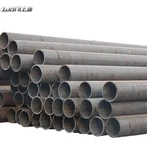
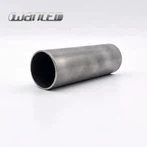
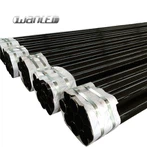
There are significant differences in performance between square and round tubes, mainly reflected in strength, stiffness, compressive strength, and bending performance, etc.
Strength and Stiffness
Due to their cross-sectional shape being similar to square or rectangle, square and rectangular tubes can effectively resist deformation and torsion from external forces. Therefore, under the same materials and dimensions, square and rectangular tubes usually have higher strength and stiffness than round tubes. In contrast, round tubes perform well in uniformly distributed stress, but their strength and stiffness may be slightly inferior to square and rectangular tubes with the same material and size.
Compressive strength and Bending strength
Round tubes have good compressive performance due to their cross-sectional shape that can evenly distribute stress. When subjected to large loads, square and rectangular tubes also have strong compressive strength, but their advantages are mainly reflected in the resistance for torsion and bending. Their cross-sectional shape provides a larger moment of inertia and plane modulus. That's why square and rectangular tubes have excellent bending performance. In contrast, round tubes may face greater challenges in bending and are not suitable as the main structural component for bearing bending loads
Fluid transportation
The cross-sectional shape of round tubes facilitates flow of fluid, which makes round tubes easier to discharge or transport fluid and reduce the possibility of water accumulation than square and rectangular tubes. So round tubes are widely used in drainage systems, fluid transportation systems, and other pipeline systems. In contrast, square and rectangular tubes are not suitable for transportation of fluid.
In summary, the selection between round tubes and square or rectangular shall be based on specific application requirements.