


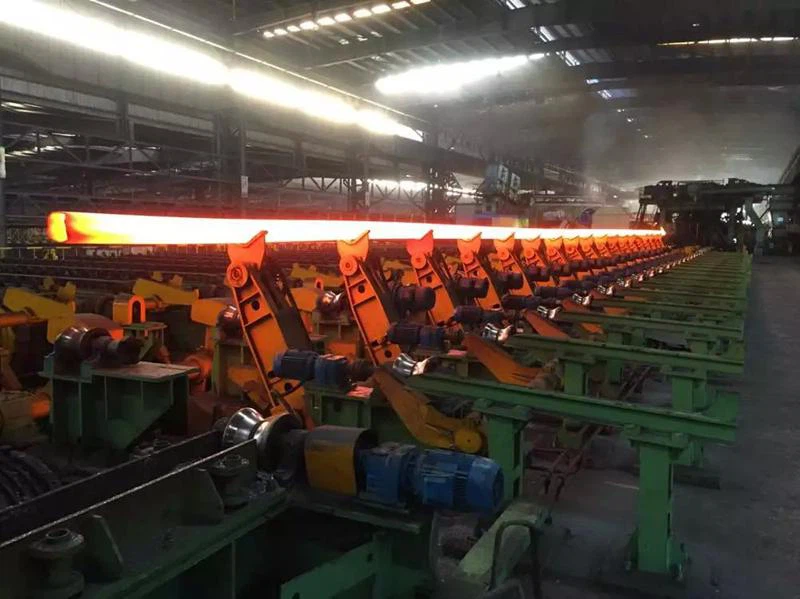
Steel pipe is now one of the most adaptable materials used in the oil and gas industry, as well as the heavy civil and marine building sectors. Both welded and seamless steel pipes are available for purchase in these long, hollow steel tubes.
A billet, or heated solid round cylinder, is used to make seamless steel pipes. The billet is then forced over a die, which forces the tube's center out and leaves a hollow cylinder behind. The stronger of the two varieties of steel pipe is said to be seamless, although it is more costly. The lack of a welded crease gives this particular type of pipe a higher tensile strength.
Steel sheets are rolled and welded along the seams to create welded steel pipes. The pipe is consequently welded down its full length. Compared to seamless pipe, this kind of pipe often has more constant wall thickness. Seamless pipe is more costly, but welded pipe is more widely accessible. Steel pipes that have been welded also produce more effectively.
Steel pipe has several more practical uses in addition to being used to carry commodities (such as water, gas, or oil) across long distances. The advantages of steel pipes and their usage in structural (building) and transportation applications will be covered in this essay.
Steel pipe advantages:
Steel pipe is a common choice for building projects for a variety of reasons, but one of the most frequently mentioned ones is steel's adaptability. Steel pipes are available in a variety of diameters, and because of their strength and longevity, they are a fantastic option for many different tasks.
Steel pipe is used in major civil construction as a more dependable, more affordable alternative to other metals like iron. Compared to other forms of metal, steel pipes are better equipped to endure the elements. In addition, under severe circumstances, steel is less likely to completely shatter.
--Construction: In the construction business, steel pipes are used to build temporary structures like crane access trestles. Steel pipes are frequently used for deep excavation work and in cofferdams.
--Pipe piling and foundation: Steel pipe piles have become more widely used throughout the years, in large part because of their resilience to pressure and vibration. In a technique called as combi-wall, pipe piles and sheet piles are occasionally combined to build reinforced retaining walls, cofferdams, or temporary terminals. Shoring, temporary dock, and navigation piling are prominent applications for steel pipe piles.
In pile driving applications, seamless pipe is frequently utilized. When the ground is unstable or the soil is too fragile, these piles are employed to sustain the weight of structural elements. In order to build docks and work surfaces, they are also employed in bridge and maritime building.
Steel pipe for transporting:
Transit of natural gas and oil, covering for cables and wires, and of course, water and sewage transportation are some more common uses for steel pipe.
--Line pipe is a special kind of steel pipe composed of high-strength carbon steel that is used to transfer oil and natural gas from the oilfield to tanks, vehicles, or refineries. In order to safeguard other subterranean pipes, this kind of pipe is also employed as casing pipe.
--Water: Steel pipe has long been used at pumping stations and in water delivery systems. Steel is a fantastic material for water treatment plants because of its resistance to rust and corrosion. For culverts, discharge lines in dewatering operations, and pressure testing, steel pipes are most frequently utilized.
Steel pipes used for transportation can be either seamless or welded, depending on the grade, kind, and strength of pipe required. Consult the GB, ASTM, ASME, EN, DIN, JIS, BS, GOST standards for detailed project recommendations.
If you have any questions or would like additional information, please call us at +86-18526839451 or email admin@wanleipipe.com


